
 2026 Oregon Home Award Winner
Portland’s rain doesn’t negotiate — and neither does dry rot. What starts as a soft spot on a windowsill quietly spreads through siding, framing, and structural beams until “a little rot” becomes a rebuild. K&H Construction & Remodeling finds it, fixes it properly, and — most importantly — fixes the moisture problem that caused it. We’ve completed over $500,000 in dry rot repairs across Portland in the last two years, from a single deck to full structural overhauls of multi-unit buildings, as a licensed, family-run local contractor (Oregon CCB #233813 — verify).
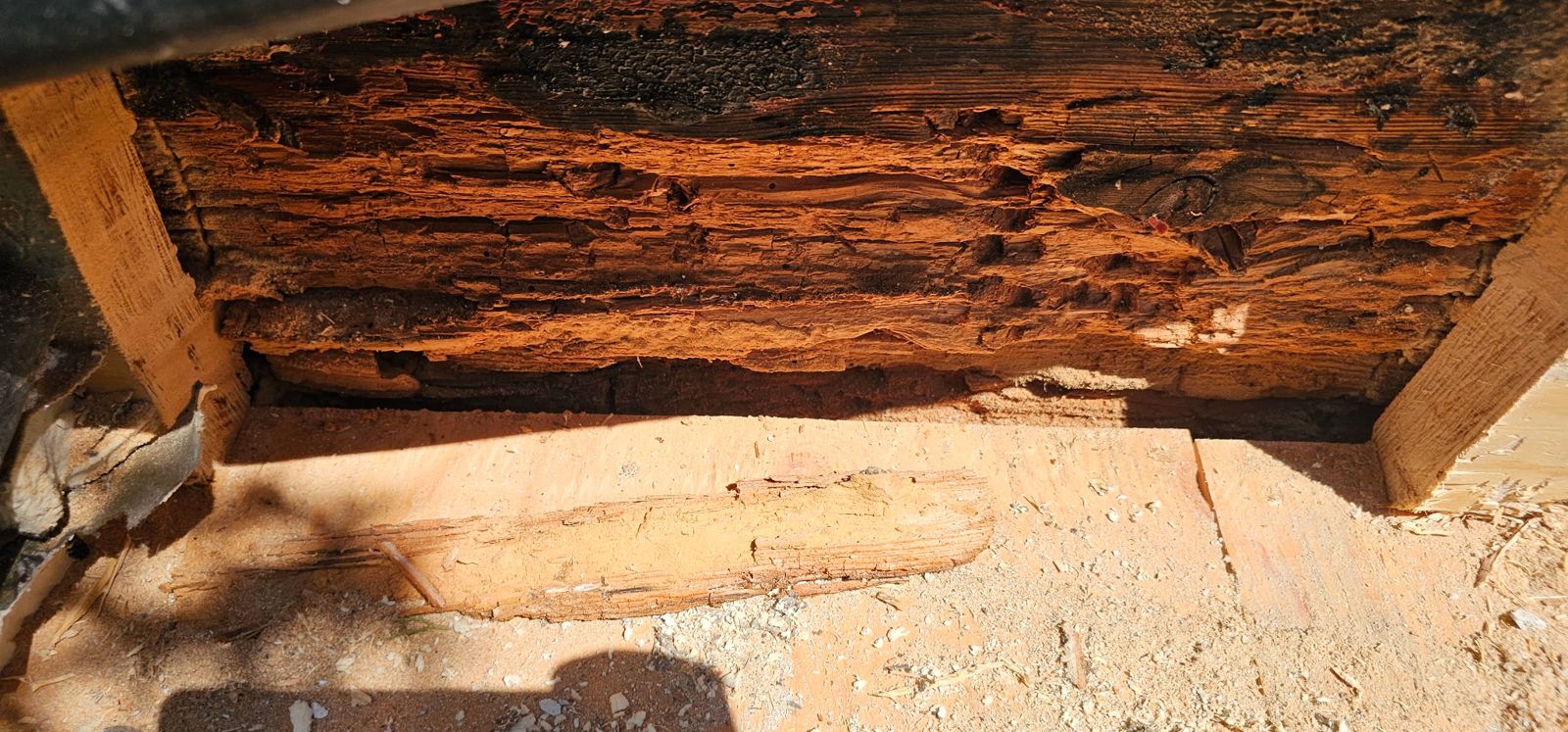
How to Tell You Have Dry Rot
- ✓ Soft or spongy wood — trim, sills, or decking that gives under a screwdriver
- ✓ Bubbling or peeling paint that keeps coming back in the same spot
- ✓ Cracked, shrunken, “cubed” wood — the checkerboard pattern is the fungus’s signature
- ✓ Swollen trim or siding that no longer sits flat
- ✓ A musty, damp smell near windows, decks, or crawl spaces
- ✓ Stains spreading from corners of windows, doors, and deck ledgers
Dry rot is a wood-decay fungus, and the name is misleading — it needs moisture to start. That’s why it loves Portland: wind-driven rain, shaded north walls, and decades-old flashing details give it everything it wants. And because it spreads inside the wood, what’s visible at the surface is almost never the full extent.
Dry Rot Work We Do
Structural Repairs
Rotted beams, posts, joists, and rim boards replaced with proper shoring, engineering where required, and permits — not sistered-over and hidden.
Siding & Envelope
Rotted siding sections removed, sheathing and framing repaired, moisture barrier and flashing corrected, new siding matched or upgraded.
Window Replacement
Windows are dry rot’s favorite doorway. We replace rotted units and frames and flash them correctly so water never gets back in.
Decks & Exterior Structures
Deck boards, framing, posts, and ledger connections — the ledger is where deck rot gets dangerous, and it’s the first place we look.
Trim, Fascia & Spot Repairs
Small caught-it-early repairs done right: rot cut out to clean wood, treated, rebuilt, and paint-matched.
Moisture-Source Correction
Every repair includes finding and fixing the leak, flashing failure, or drainage problem that fed the rot — or it will be back.
Recent Dry Rot Projects
Two full structural overhauls, NW Portland (2025–2026). A pair of multi-unit condo buildings with dry rot deep in the structure — each roughly a $200,000+ envelope rebuild: new structural beams, siding replacement, window packages, and corrected flashing throughout. This is the scale of dry rot work most repair companies can’t take on — it’s remodeler-grade structural carpentry, permitted and inspected.

Rot the surface never showed
From outside, this parapet looked tired but intact. Underneath: the sill and sheathing had been feeding a decay fungus for years. This is why we open assemblies until we reach clean wood — the visible damage is never the whole story, and an estimate based on the surface is a guess.
- ✓ Every opened assembly photographed and documented
- ✓ Scope mapped to clean, sound framing
- ✓ Moisture source identified before rebuild starts
New structure, not patched symptoms
The rotted members came out and engineered beams went in — shored properly, permitted, and inspected. This is the difference between a remodeling contractor and a patch crew: when dry rot reaches structure, the fix is carpentry, and it has to hold the building up for the next fifty years.
- ✓ Structural beams, posts & joists replaced
- ✓ Engineering and permits where required
- ✓ Correct flashing and moisture barriers on the way back together
Deck rot repair, Portland. A deck repair that turned out to have rot in the framing — caught, cut out, rebuilt, and finished. Ashley P. left us a 5-star review on that one; read it and the rest of our Google reviews.
For Condo HOAs & Property Managers
Dry rot in a multi-unit building is a different animal: shared walls, occupied units, board approvals, and repairs that have to be sequenced so residents can keep living there. Our recent NW Portland condo projects were exactly that — and they finished with new structure, new siding, and new windows, not patched symptoms. If you manage or sit on the board of a building with suspected rot, we’ll inspect, document with photos, and give you an itemized scope your board can actually evaluate.
Think you’ve found rot?
Free inspection and an itemized estimate — the earlier it’s caught, the smaller the job.
What Dry Rot Repair Costs in Portland
Honest answer: dry rot pricing depends on what we find when the wall opens up, which is why we inspect first and estimate line by line. But from our completed projects, here’s how jobs actually group:
- Spot repairs — roughly $1,500–$8,000. A windowsill, a run of trim or fascia, a deck post: rot cut out, treated, rebuilt, painted. Real example: a recent deck rot repair came in right around $3,000.
- Section repairs — roughly $8,000–$40,000. A siding elevation, deck framing, or several framing members, including moisture-barrier and flashing correction.
- Structural repairs — roughly $40,000–$150,000. Beams, posts, and sheathing with shoring and permits, plus window replacement where rot entered.
- Multi-unit / whole-envelope rebuilds — $150,000+. Our recent condo overhauls ran $200,000+ per building: structure, siding, and windows, sequenced around residents.
Two things keep dry rot bills down: catching it early, and fixing the water source the first time. The most expensive rot repair is the one you pay for twice.
Our Dry Rot Repair Process
Inspect & Trace
We probe the visible rot and trace the moisture to its source — roof, flashing, grade, or plumbing.
Open Up & Map
Rot spreads inside the wood. We open the assembly until we reach clean, sound framing — then you get the real scope.
Scope & Estimate
Line-item pricing for exactly what we found — and what it takes to keep it from coming back.
Permits
Most dry rot repairs need no permit. When structural framing is replaced, we pull one with the City — allow 3–4 weeks for approval.
Repair & Rebuild
Structural members replaced and inspected, assemblies rebuilt with correct barriers and flashing.
Finish & Prevent
Siding, trim, and paint matched — and the moisture source corrected so the rot doesn’t return.
After We’re Done: Our Workmanship Warranty, in Plain English
Every K&H project comes with a one-year warranty on our labor and the materials we installed. The clock starts after the final walkthrough, once the punch-list items are done. If something we built turns out to have a defect in the materials or the workmanship, tell us in writing within that year and we’ll repair or replace it at our expense — within 30 days of hearing from you.
- ✓ Covers our work, done to the plans, specifications, change orders, and building code — and the materials we installed
- ✓ Doesn’t cover normal wear and tear, natural disasters, later changes to the structure or grading by the owner, or damage from neglect
- ✓ To request service, email the owner who managed your project or renovate@kandhco.com with what you’re seeing and a photo — that counts as written notice
One of our owners manages every project and is your point of contact from the first visit through the warranty year. This is the plain-English version of the limited express warranty in your contract; the signed contract holds the full terms, and it’s the one warranty we give in place of any implied ones.
Portland Dry Rot FAQ
How much does dry rot repair cost?
In Portland, small spot repairs typically run $1,500–$8,000, section repairs $8,000–$40,000, and structural work $40,000 and up — our recent multi-unit envelope rebuilds ran $200,000+ per building. The honest number comes from opening up the assembly, which is why we start with a free inspection and an itemized estimate.
Is dry rot covered by homeowners insurance?
Usually only when it results from a sudden, covered water event — slow leaks and long-term moisture are typically excluded as maintenance. Every policy differs. We document everything we open up with photos, which is exactly what you need if a claim is possible.
Can’t you just treat the wood instead of replacing it?
Borate treatments have a place at the edges of a repair, but wood that’s lost structural integrity has to go. Painting or injecting over compromised framing hides the problem while it spreads. We cut back to sound wood, treat the transition, and rebuild.
How fast does dry rot spread?
With a steady moisture source, noticeably — season to season, not year to year. A soft windowsill this winter can mean sheathing and framing repairs by next. It’s the rare repair that genuinely gets more expensive the longer you wait.
Do structural dry rot repairs need permits in Portland?
Replacing structural members — beams, posts, joists — is permitted work, and multi-unit buildings add their own requirements. We handle permits, engineering when required, and inspections as part of the project.
Do you work on condos and multi-family buildings?
Yes — it’s become a specialty. Our two most recent major dry rot projects were multi-unit condo buildings in NW Portland: structural beams, siding, and windows, sequenced around occupied units and coordinated with the HOA.
Do you repair dry rot in Milwaukie and Oak Grove?
Yes — the Clackamas side of the metro is part of our regular service area, and rot doesn’t respect city limits. Older housing stock, mature tree canopy, and river-bottom moisture make Milwaukie and Oak Grove prime territory for exactly the repairs we do across Portland: free inspection, itemized estimate, cut back to sound wood, rebuilt right.
Which areas do you serve?
All of Portland — NW and inner-eastside neighborhoods see the most rot calls — plus Beaverton, Tigard, Lake Oswego, Milwaukie and Oak Grove, Gresham, Happy Valley, Hillsboro, and West Linn.
Do you warranty your work?
Yes — one year on our labor and the materials we installed, starting after the final walkthrough once the punch list is done. Report a defect in writing and we repair or replace it at our expense within 30 days.
What if something goes wrong after the project is finished?
Email the owner who managed your project, or renovate@kandhco.com, with what you’re seeing and a photo. If it’s a defect in our materials or workmanship inside the first year, we fix it — no charge.
What isn’t covered by the warranty?
Normal wear and tear, natural disasters, later changes to the structure or grading by the owner, and damage from neglect. The full terms are in your contract.
Dry rot found during a remodel? We handle that too — see our home renovation services, browse the project gallery, or call (971) 220-6397 for a free inspection.